
Signia One App Review: The Hearing Aid You Can Text — How the New Signia Assistant Adjusts Your Hearing Aids in Plain English
Every hearing aid brand now talks about artificial intelligence. Most of the time it is invisible to you: it lives inside the chip, quietly deciding how much noise to remove. Useful, but not something you ever experience. The new Signia One app is the first time we have seen AI in hearing aids that you can actually use — you type how you are hearing, in ordinary English, and the aids adjust. Our audiologists have been trying it with the Signia MaX hearing aids in our Wimbledon, Teddington, Wallington and Addiscombe clinics, and, put simply, it is the most exciting piece of hearing-aid software we have seen in years. Here is what it does, what it does not do, and who it is for.
What is the Signia One app?
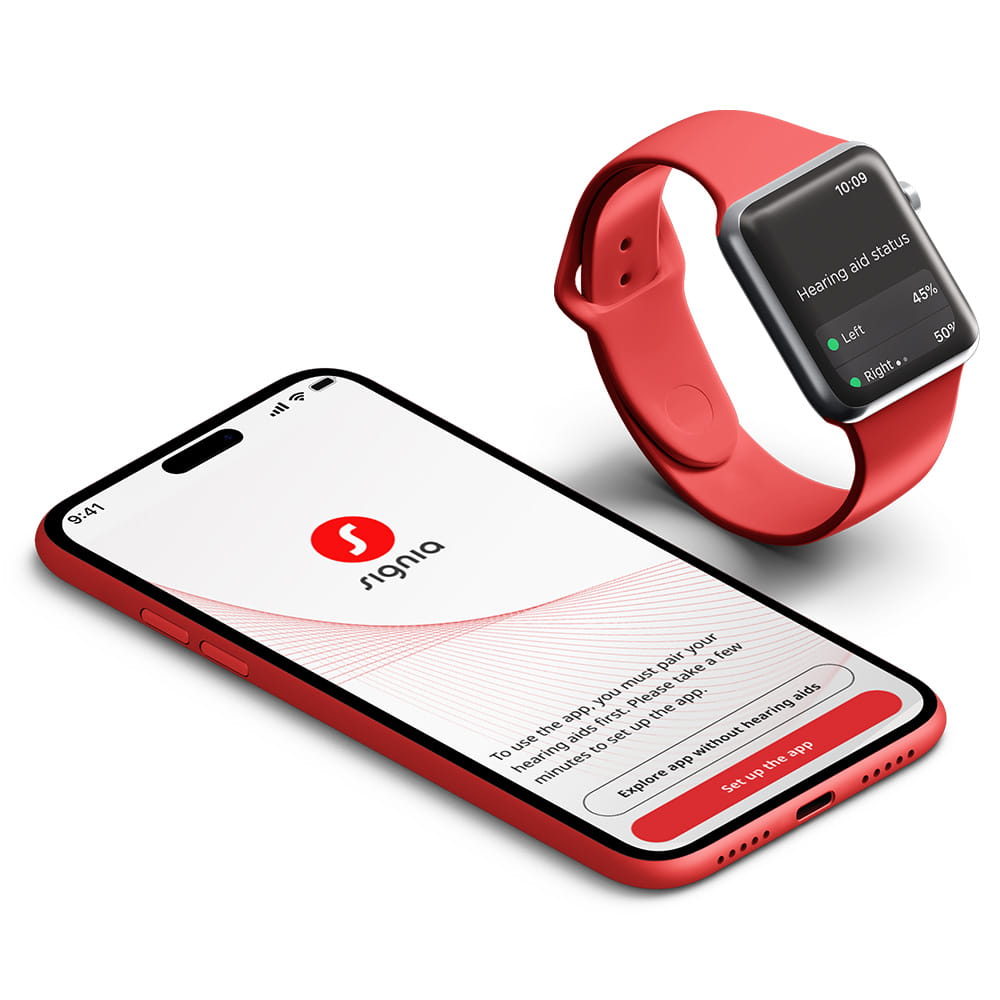
Signia One is the brand-new companion app for Signia MaX hearing aids, launched alongside the Pure Charge&Go MaX in 2026. It replaces the menus-and-sliders approach of traditional hearing aid apps with three things in one place: everyday control (programs, volume, streaming), TeleCare remote support from your audiologist, and the headline feature — the new generative-AI Signia Assistant, a conversational helper you talk to in natural language.
One important thing to get right, because Signia themselves run two apps: the Signia app is for earlier platforms such as Signia IX; the Signia One app is only compatible with Signia MaX hearing aids. If you wear Pure Charge&Go MaX, Signia One is your app. If you wear an IX model, you stay on the Signia app — which also has a version of the Assistant, but not the new MaX-era experience described here.
“It’s like ChatGPT for your hearing aids”
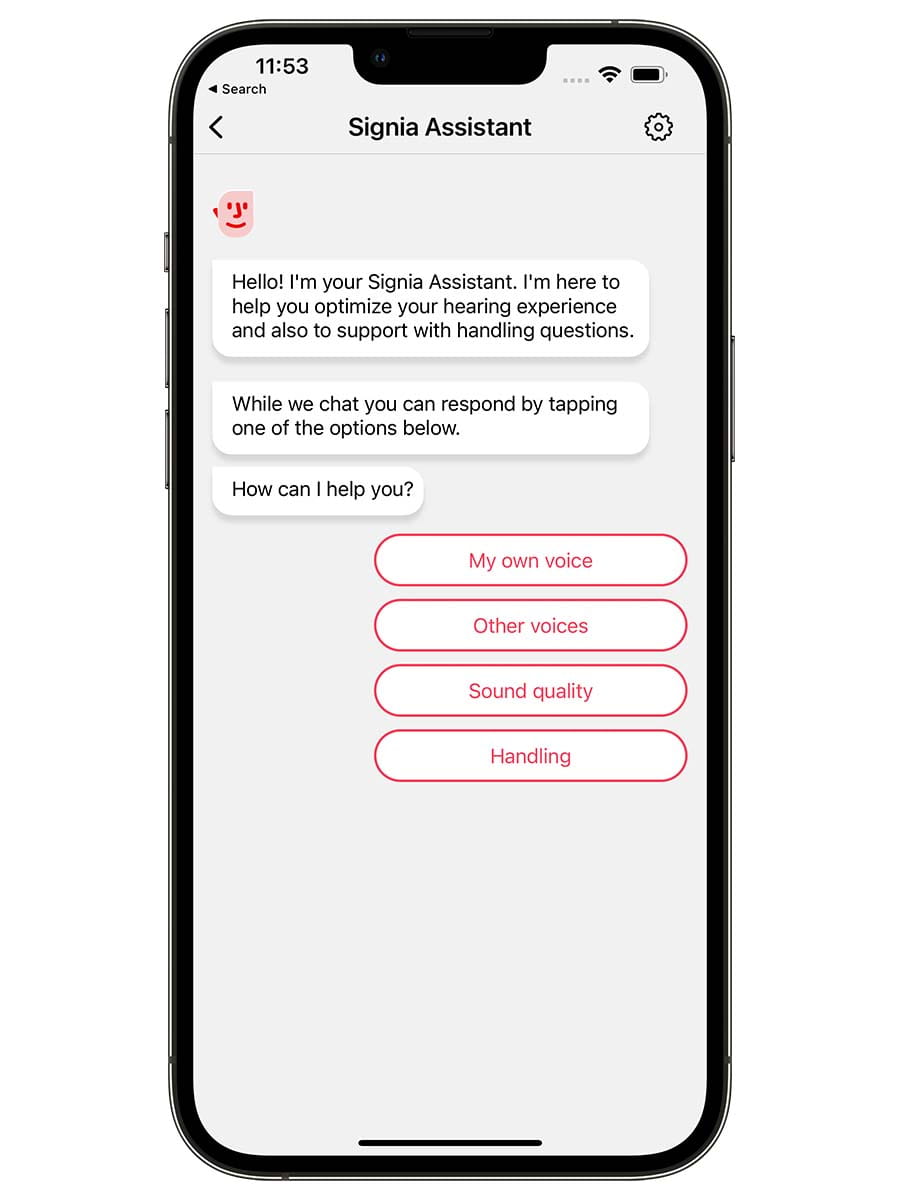
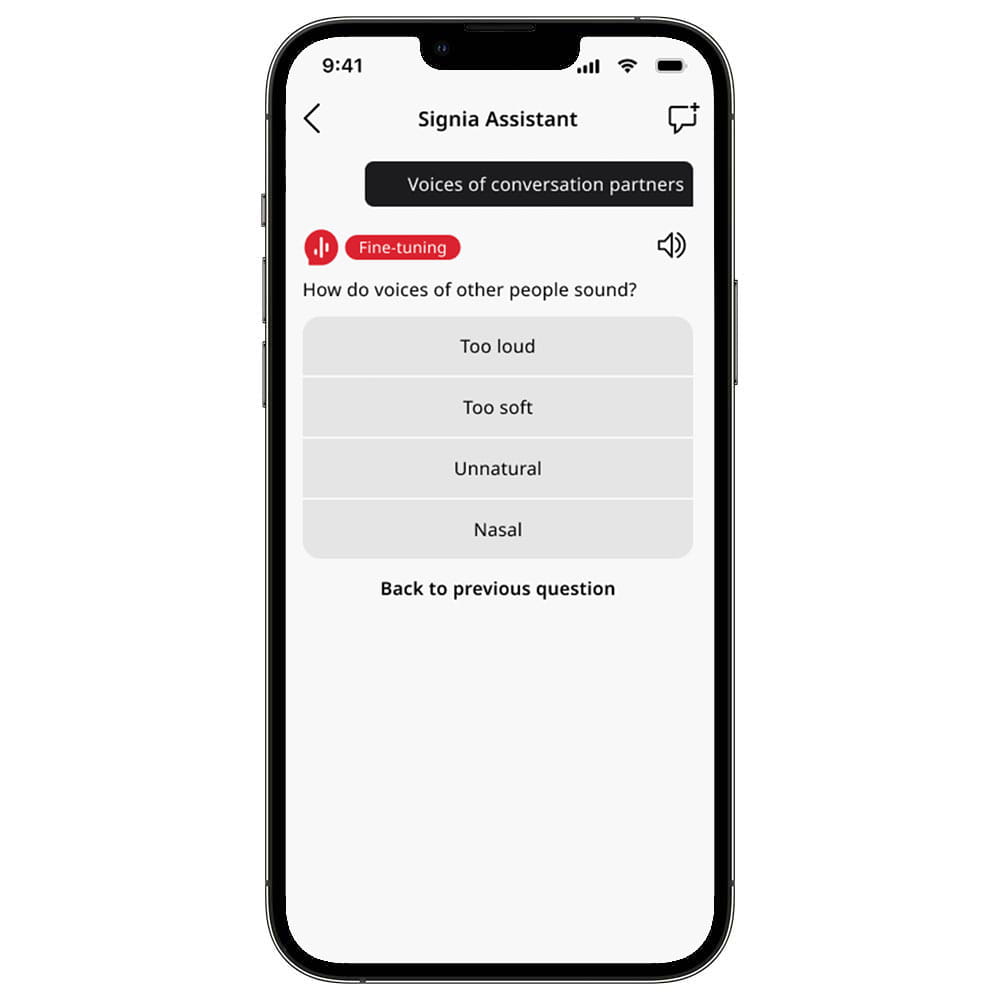
That is how our director Sumit describes it, and it is the fairest summary. Instead of hunting through settings, you open the Signia Assistant and type what is happening, the way you would message a friend. Signia’s own description is that the Assistant “understands real-life questions and gives easy, tailored answers”, and that its new guided fine-tuning “understands the user’s current hearing situation and suggests simple ways to improve it” — applying what Signia calls safe, clinically bounded audiological adjustments to your hearing aids.
In practice, that means messages like these:
“I’m struggling to hear my husband’s voice — can you make it clearer?” The Assistant works out which adjustment addresses that and offers it; accept it and the change is made on your hearing aids there and then.
“I’m in a restaurant and I can’t hear everyone around the table.” This is the situation Signia MaX was built for. Its RealTime Conversation Enhancement is designed to locate and enhance several conversation partners at once, and Signia say the Assistant integrates with it to fine-tune the aids in that moment.
“My own voice sounds unnatural — can you fix it?” MaX has a dedicated deep neural network for own-voice detection, and this is one of the most common early complaints new wearers have. The Assistant lets you deal with it on the spot rather than living with it until your next appointment.
If your problem is a handling question rather than a sound question — how do I clean the wax guard, why won’t it pair with my phone — the Assistant talks you through it step by step, with how-to videos where they help.
Why this is different from the “AI” in every other hearing aid
Hearing aids have used machine learning for years, and the current generation — Signia MaX, Phonak EON, Oticon Reveal — all carry impressive on-chip neural networks. What those systems have in common is that they are automatic: they decide, you receive. There has been no way for you to tell the hearing aid what it got wrong, in the moment, in words. The Signia Assistant closes that loop. The aid’s on-board Acoustic Intelligence handles the milliseconds; you handle the “actually, I’d like his voice a little clearer” — and the app translates that into an adjustment an audiologist would recognise as sensible.
Two reassurances patients ask us about. First, the adjustments are bounded: the Assistant makes changes within limits set by your prescription, not wholesale reprogramming. Second, nothing happens behind your audiologist’s back. Signia’s fitting software shows us every adjustment the Assistant has made since your last visit — the situation you were in, the issue, and the solution it applied — so at your next appointment we can see exactly what your real week looked like and build it into your fitting. That, for us, is the real breakthrough: it turns your daily experience into data we can act on.
Does it work? What Signia’s research says
The Signia Assistant is not new — the text-based version launched on earlier platforms — and Signia’s published study of wearers using it (Hoydal et al., Hearing Review, 2020) reported that 93% were satisfied with their hearing aids in difficult listening situations when using the Assistant, 93% felt more in control of their hearing success, 87% said it increased the benefit of their hearing aids, and 8 out of 10 would recommend hearing aids with the Assistant to a friend. The 2026 Signia One version adds the generative-AI, natural-language layer on top of that foundation. We would expect those numbers to move in only one direction, but it is worth being clear that the new research on the MaX-era Assistant is still to come.
Remote fine-tuning: your audiologist without the journey
The second pillar of Signia One is TeleCare. Through the app, we can adjust your hearing aids remotely — no live appointment needed — and you can reach us by text, voice or video call through CareChat. For our patients in Surrey and South London that means a niggle on Tuesday can be sorted on Tuesday, not held until you can get to Wimbledon or Wallington. It sits perfectly alongside our 4 years of unlimited aftercare: same care, less travelling.
Everything else the Signia One app does
Beyond the Assistant, Signia One is a complete remote control. You can switch hearing programs and volume, adjust sound balance, steer where the aids focus with the 360° Spatial Configurator, manage streaming from your phone, TV Sound and StreamLine Mic accessories, control streaming volume separately, and keep an eye on connection and battery status. It offers hearing lessons to help new wearers settle in at their own pace, and a quick daily satisfaction rating so you — and we — can track how you are getting on. Signia have also built it with accessibility as standard: full VoiceOver on iPhone and TalkBack on Android, dark and light modes, haptic feedback, adjustable text size, swipe gestures between programs and Apple Watch compatibility. And it is the channel for firmware updates — Signia have said full Auracast™ broadcast-audio functionality on Pure Charge&Go MaX will be enabled through a Signia One app update by March 2027.
Which hearing aids work with the Signia One app?
Only Signia MaX hearing aids. At The Hearing Specialist that is the Signia Pure Charge&Go MaX, available in three technology levels — MaX 3 at £3,495, MaX 5 at £3,695 and MaX 7 at £3,895 per pair — every price including the charger, fitting by our HCPC-registered audiologists, a 4-year warranty and 4 years of unlimited aftercare. The level sets how finely the on-board Acoustic Intelligence supports you as background noise rises, which is exactly what a wear-at-home trial shows you. The app itself is free, runs on iPhone (iOS 17 or later) and Android, and we pair it for you at your fitting.
Your Signia One app questions, answered
Is the Signia One app the same as the Signia app?
No. The Signia app is for earlier platforms such as Signia IX. The Signia One app is a new app that works only with Signia MaX hearing aids, and it is where the new generative-AI Signia Assistant and guided fine-tuning live.
Can I really adjust my hearing aids by typing a message?
Yes. You describe the situation in plain English, the Signia Assistant suggests an adjustment, and when you accept it the change is applied to your hearing aids. Adjustments are kept within safe, clinically set limits, and your audiologist can see every change at your next appointment.
Do I still need my audiologist?
Yes — Signia describe the Assistant as supporting professional care between appointments, not replacing it. Your prescription and the boundaries the Assistant works within are all set by your audiologist. The app simply means fewer small problems have to wait for a visit.
Will it work on my phone?
The Signia One app is free on the App Store for iPhone (iOS 17 or later, with Apple Watch support) and on Google Play for Android. Feature availability can depend on your phone and how your hearing aids are set up, so bring your phone to your appointment and we will pair and test it with you.
Is it available on the Signia Pure Charge&Go MaX in the UK?
Yes. We fit the Pure Charge&Go MaX at all four clinics, and it is the first hearing aid on the Signia MaX platform. You can trial it at home with the Signia One app before you decide.
Can I try it before I buy?
Yes. Book a £59 hearing assessment at Wimbledon, Teddington, Wallington or Addiscombe; if the MaX suits your hearing loss, we fit it to your prescription, set up the Signia One app on your phone and send you home on trial — so you can text your hearing aids in your own noisy restaurant, not ours.
Our verdict
For years “AI” in hearing aids has been a promise on a brochure. The Signia One app is the first time a patient can feel it: describe the problem, get the fix, carry on with your evening. It will not replace a proper fitting — nothing does — but as a way of living with hearing aids, it is a step change, and it is why the Pure Charge&Go MaX has quickly become the aid we suggest to anyone who wants to be in control of their own hearing. Hear it for yourself: book a consultation and we will send you home on trial with the app set up and ready to talk to.
Read next: our Signia Pure Charge&Go MaX review and the full comparison New Hearing Aids 2026: Phonak EON vs Signia MaX vs Oticon Reveal.