Signia Pure Charge&Go MaX: What ‘Multi-Dimensional AI’ Actually Means for Your Hearing
“AI” is stamped on almost every hearing aid box these days, which makes it hard to know when something genuinely new has arrived. Signia’s new Pure Charge&Go MaX is genuinely new — and since it landed at our Wimbledon, Teddington, Wallington and Addiscombe clinics, it has prompted more questions than any Signia launch since the Styletto. Here is what “multi-dimensional AI” actually means, in plain English.
One noise button vs four brains
Most hearing aids treat background noise as a single problem: detect it, turn it down. The MaX takes a different approach Signia calls Acoustic Intelligence™ — four deep neural networks, each trained on a different dimension of sound, working together in real time:
Ambient Scene Adaptation continuously works out what kind of place you are in — café, car, kitchen, concert — and optimises for it. Dynamic Noise Control understands what the noise is, where it is coming from, and whether you are actually in conversation before it adjusts anything. RealTime Conversation Enhancement — the technology Signia wearers already love — tracks multiple conversation partners with more precision than ever. And Own Voice Processing keeps your own voice sounding natural, even in quick back-and-forth conversation, with no in-clinic training needed.
The result, in Signia’s words, is hearing that adapts to the full moment, not just the noise. In our words: the busy table — the single hardest place for any hearing aid wearer — is exactly what this platform was built for. Signia’s campaign slogan is literally “Time to Live Noisy”.
Four deep neural networks, one moment
Each network is trained on one part of the scene; the MaX combines them in real time.
A single-network hearing aid
Signia MaX — Acoustic Intelligence™
Source: Signia (WS Audiology) MaX launch, August 2026.
The hardware leap, in numbers
Signia’s platform figures for MaX against the previous IX generation: 54 times more processing power, 75% more data points analysed per second, twice the memory and 50% greater efficiency — all in a housing no bigger than the Pure Charge&Go IX. Our honest caveat: chip numbers describe the engine, not the destination. What they buy is four deep neural networks running simultaneously where one used to — and that is something you judge at a busy table on trial, not on a spec sheet.
The MaX chip against the Signia IX
Source: Signia platform data, 2026.
The practical stuff
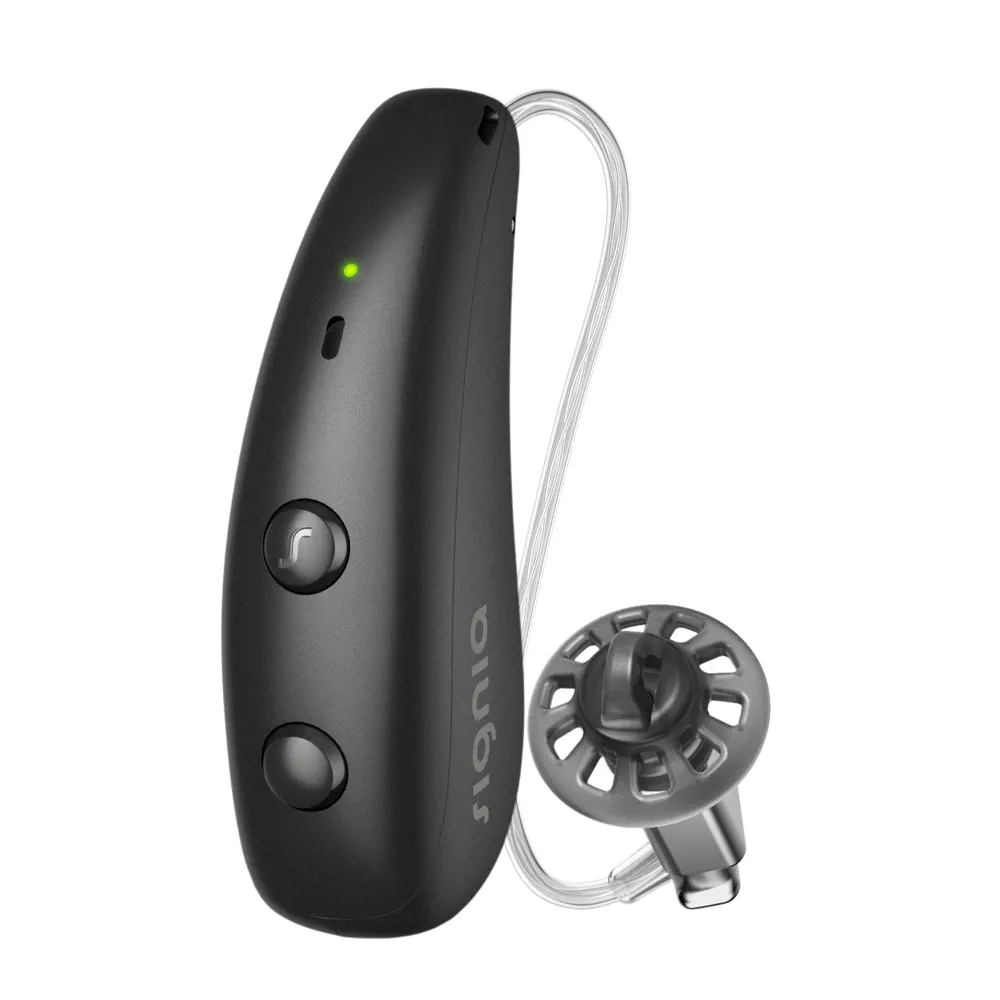
The MaX is a rechargeable receiver-in-canal aid with up to 30 hours per charge, eight colours, and unusually complete connectivity: Bluetooth Classic for today’s devices, LE Audio for the new generation, a telecoil for loop systems, and Auracast-ready hardware — Signia has committed to switching Auracast on via a free firmware update by March 2027, so the aid you buy today is ready for public-venue audio as it rolls out across the UK.
There is also a genuinely useful software touch: the Signia Assistant now supports natural-language chat, so between appointments you can simply describe a problem (“my left aid sounds muffled in meetings”) and get real help — with our clinic still behind you for anything bigger.
Signia MaX prices in the UK
At The Hearing Specialist the Pure Charge&Go MaX costs £3,495 to £3,895 per pair: MaX 3 at £3,495, MaX 5 at £3,695 and MaX 7 at £3,895. All prices include the charger, fitting by HCPC-registered audiologists, a 4-year warranty and 4 years of unlimited aftercare. As always, compare like with like — our prices page explains what should be included in any quote.
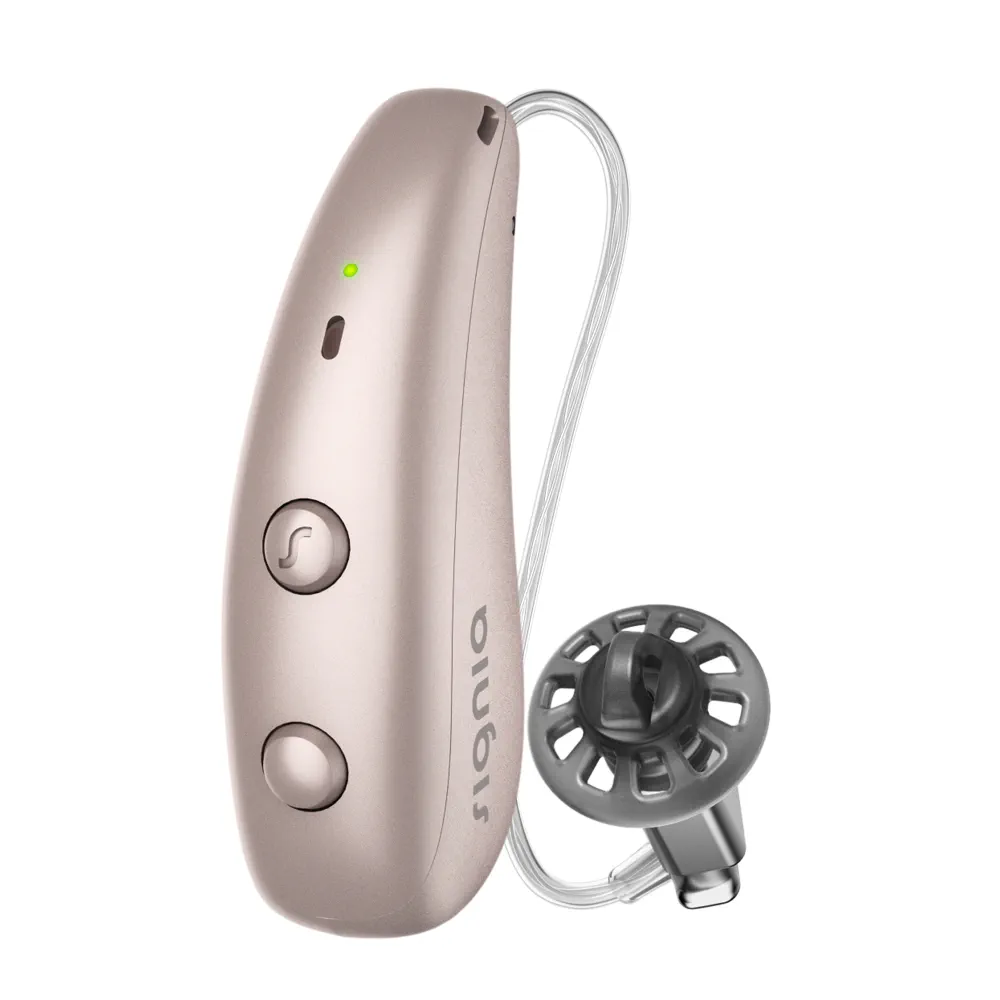
Signia Pure Charge&Go MaX colours
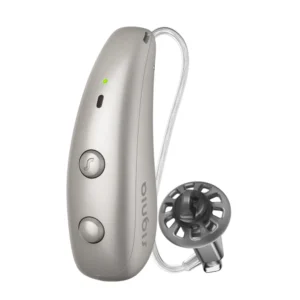
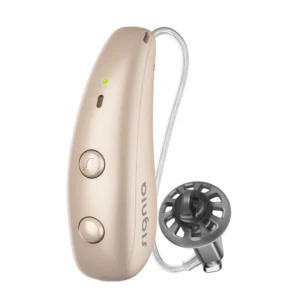
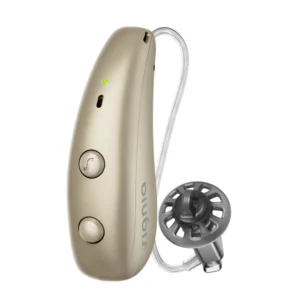
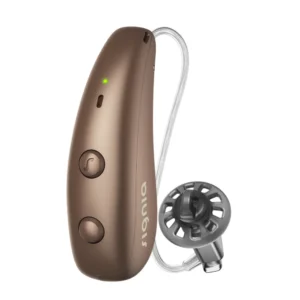
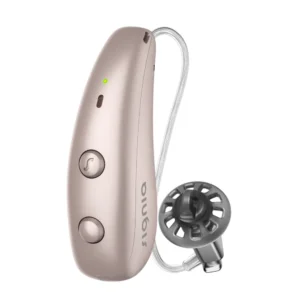
MaX 3 vs 5 vs 7
All three run the same Acoustic Intelligence platform, colours and connectivity; the level sets how precisely the four networks operate in complex noise. The 7 is what we fit most for busy social and working lives; the 3 is a strong, honest choice for quieter routines. The practical difference is noise: as the room gets louder, the higher levels keep conversation clearer for longer. The right answer depends on your week — and a home trial beats any brochure comparison.
MaX 3, 5 or 7
| MaX level | Best for | Price per pair |
|---|---|---|
| MaX 7 | Busy social and working lives — the four networks at full precision | £3,895 |
| MaX 5 | Family meals and cafés — advanced precision | £3,695 |
| MaX 3 | Quieter, routine weeks — essential precision | £3,495 |
All three levels share the same design, battery, colours and connectivity. Prices per pair at The Hearing Specialist.
How it compares
Against the Pure Charge&Go IX it replaces nothing — the IX remains excellent — but the MaX’s four-network processing and LE Audio/Auracast readiness make it the more future-proof choice for new fittings. If invisibility matters more than raw group-conversation performance, the Signia Active Mini IX — the world’s smallest ready-to-wear in-the-ear aid — is the other Signia we would put on your shortlist. Unsure which style suits you? Our BTE vs ITE guide walks through the trade-offs.
The MaX against the Signias it sits beside
Swipe the table sideways to compare →
| Feature | Signia Pure Charge&Go MaX |  Signia Pure Charge&Go IX Signia Pure Charge&Go IX | 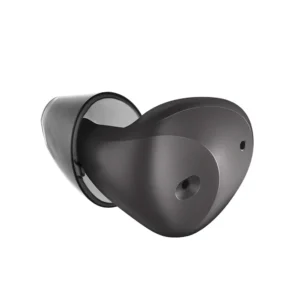 Signia Active Mini IX Signia Active Mini IX |
|---|---|---|---|
| Style | Receiver-in-canal (RIC) | Receiver-in-canal (RIC) | Ready-to-wear in-the-ear |
| Standout technology | Acoustic Intelligence™ — four deep neural networks | RealTime Conversation Enhancement | Two microphones in the smallest ready-to-wear ITE |
| Rechargeable | Yes — up to 30 hours | Yes | Yes — up to 21 hours |
| Connectivity | Bluetooth Classic, LE Audio, telecoil; Auracast by update (Mar 2027) | Bluetooth to both ears | MFi, ASHA and LE Audio |
| Technology levels | 3 / 5 / 7 | 3IX / 5IX / 7IX | One level |
| Price per pair | £3,495–£3,895 | £3,295–£3,695 | £3,895 |
| Full details | Prices & details → | Prices & details → | Prices & details → |
Signia specifications; prices are per pair at The Hearing Specialist.
Questions patients are already asking
Is this actually different from other “AI hearing aids”?
Mostly, yes. Many aids use a single neural network for noise reduction. The MaX runs four specialised networks concurrently — scene, noise, conversation and own-voice — and lets them negotiate the moment together. Whether that difference matters to you depends on how much of your week happens in complex noise; that is exactly what a home trial answers.
Will Auracast matter to me?
Over the next few years, increasingly yes — theatres, gyms, airports and churches are beginning to broadcast audio directly to hearing devices. The MaX’s hardware is ready today, with Signia’s firmware switch-on committed by March 2027. Buying Auracast-ready now is sensible future-proofing rather than hype.
I already wear Signia — will it feel familiar?
Yes. The app, the charging routine and the Signia sound character carry over; what changes is how much less you fight the room. Bring your current aids to your appointment and we will run them head-to-head.
What about my own voice sounding odd?
That “echoey me” feeling is one of the biggest reasons new wearers give up. Own Voice Processing addresses it directly, and unlike earlier generations it needs no special training session in clinic — it simply works from first fit.
Hear the difference at a busy table
The MaX makes a specific promise: staying part of the conversation in noisy places. That is testable — so test it where it matters. Book a consultation at any of our four clinics, have the MaX fitted to your hearing test, and take it on trial to your own busy table. If it is not right for you, we will say so.
For the full three-way comparison, read our guide: New Hearing Aids 2026 — EON vs MaX vs Reveal.