
Hearing Aid Fitting: What to Expect at Your First Appointment
If you have been told you may benefit from hearing aids, the fitting appointment can feel like a big unknown. What will they do? Will it hurt? Will you walk out wearing something? This guide walks through what really happens, so you know what to expect before you book.
Quick answer
A hearing aid fitting is a comfortable, painless appointment lasting around an hour, where your audiologist programmes the aids to your hearing test results and teaches you to use them.
It is the start of a process, not a one-off: expect follow-up adjustments as your brain gets used to the new sound.
Before the fitting: your hearing test and choice of aids
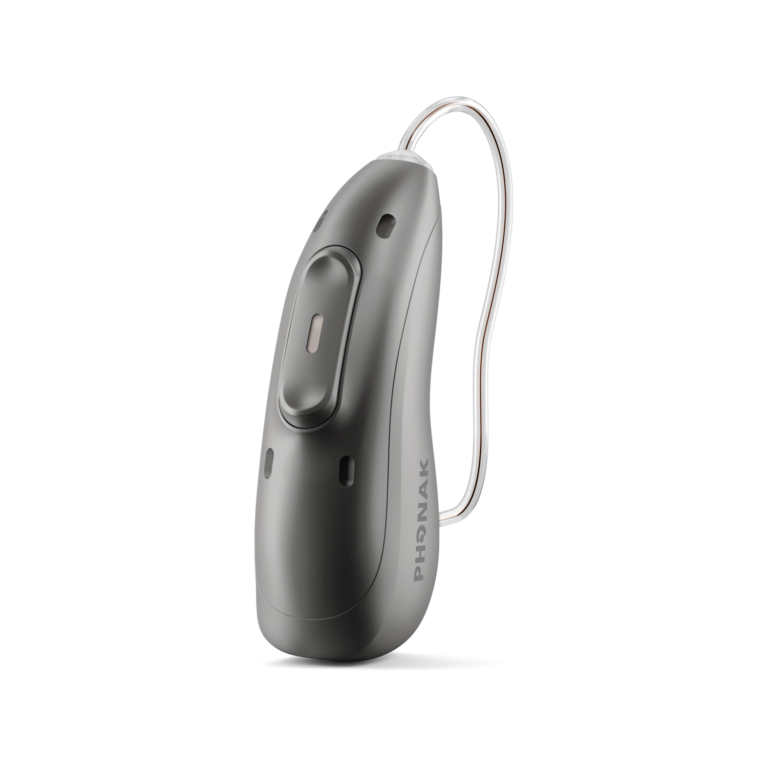
Fitting follows a hearing test, which gives us the measurements that the aids are programmed from. We then talk through style, features, budget and lifestyle. We work with Phonak, Signia, Oticon and Widex, so the recommendation depends on your hearing and what you need, not on one brand. Our hearing aid prices page shows costs openly: from £798 for a single aid and £1,695 for a pair.
What happens at the fitting appointment
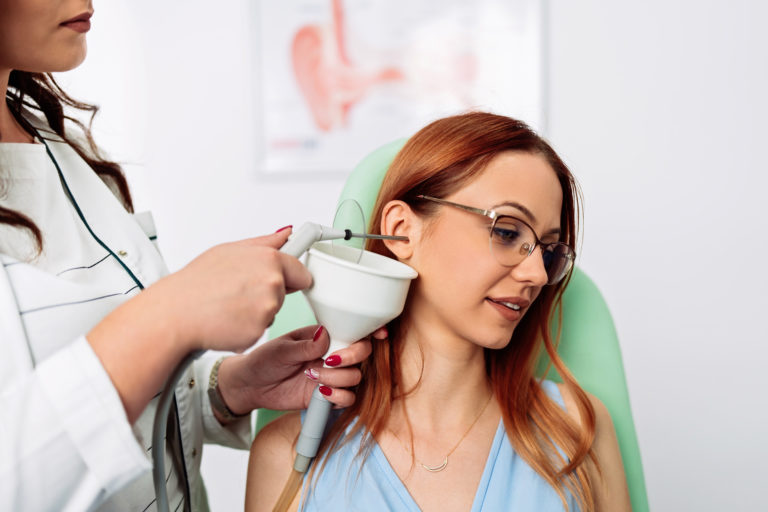
- Ear check. We look in your ears first. Wax can affect both comfort and sound quality, and it can be removed beforehand if needed.
- Fitting the aids. The aids and, where relevant, small domes or moulds are placed in or behind your ears and adjusted for comfort.
- Programming. Using your test results, the audiologist sets the amount of amplification at each pitch. This is done on a computer connected to the aids.
- Checking it sounds right. We verify the aids are doing what they should, then listen to your feedback on your own voice and everyday sounds.
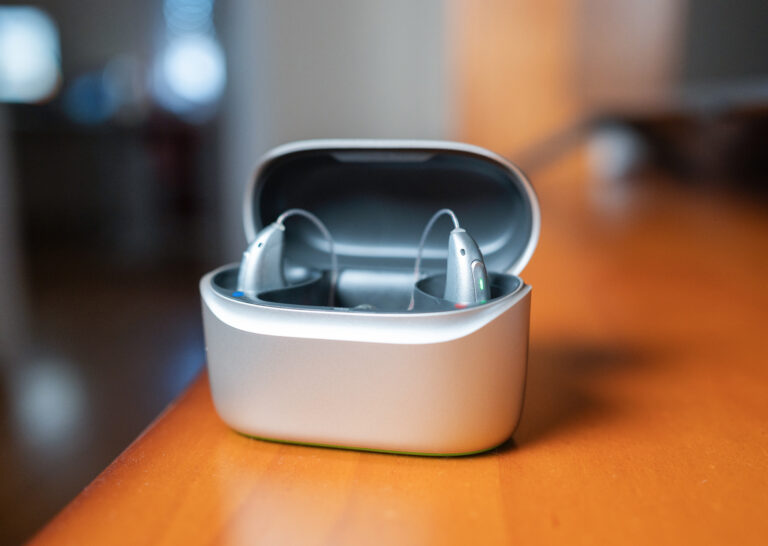
- Learning to use them. We show you how to insert and remove them, change batteries or charge them, clean them, and pair them with your phone if they are Bluetooth models.

What it will feel and sound like
Expect some surprises. Sounds you have not heard for a while, such as footsteps, a ticking clock, or paper rustling, can be noticeable. Your own voice may sound slightly different. This is normal, and it settles as your brain adapts. The NHS also advises that it takes time to get used to wearing hearing aids and recommends wearing them regularly.
Tips for getting the most from the first weeks
- Wear them for a few hours a day to begin with, then build up.
- Start in quiet rooms before busy restaurants.
- Keep a note of anything that sounds too loud, harsh or muffled to take back to your next appointment.
- Do not give up in the first week; adaptation is gradual.
Why aftercare matters
The first programming is a starting point. Real-world listening shows what needs adjusting, which is why follow-up appointments are so valuable. All of our hearing aids come with four years of unlimited aftercare, so you can come back for adjustments, cleaning and checks. If you are still comparing options, you may find our guide to how much hearing aids really cost in the UK useful.
Frequently asked questions
How long does a hearing aid fitting take?
Allow around an hour for the first fitting appointment. Your audiologist programmes the aids, checks they are comfortable and shows you how to use them. Follow-up visits are usually shorter.
Will hearing aids sound natural straight away?
Not always. Your brain has been getting less sound for some time, so voices and everyday noises can seem sharp or unfamiliar at first. Most people adapt over a few weeks, and fine-tuning helps.
Can I have the settings changed after the fitting?
Yes. Fine-tuning is a normal part of the process, and good aftercare means you can come back and have the programming adjusted as often as you need.
Hearing aid fittings in Wimbledon, Teddington, Wallington and Addiscombe
We fit hearing aids at our independent clinics in Wimbledon, Teddington, Wallington and Addiscombe. You can find each address on our locations page. If you would like to talk it through, you can book an appointment and we will explain everything at your own pace.