
Private Hearing Test vs NHS: Honest Differences, Waiting Times and How to Choose
If your hearing has slipped and you are weighing up a private hearing test against going through the NHS, the honest answer is that both routes are good — they are simply built for different things. The NHS route is free and clinically thorough, but it runs on referral and waiting lists. The private route costs money and gives you speed, choice and continuity. Neither one is “better”; the right choice depends on how quickly you want answers and how much choice you want afterwards.
Quick answer
The NHS gives you a free hearing test and free hearing aids, but usually needs a GP referral and you may wait weeks to months.
A private hearing test is typically booked within days, costs £59 with us, and gives you your results and a full explanation in the same appointment.
If you want a fast, detailed picture of your hearing — and a choice of hearing aids afterwards — private is quicker; if cost is the priority and you can wait, the NHS is excellent value.
What the NHS route actually involves
In most of England you start with your GP, who will check your ears and refer you to an NHS audiology department. Some areas now let you self-refer directly to the local audiology service without seeing a GP first — RNID keeps a good plain-English guide to which routes apply where.
You then have a hearing assessment at a hospital or community clinic. If hearing aids are appropriate, they are fitted free of charge and remain the property of the NHS, with batteries and repairs provided free. That is a genuinely good deal, and we say so to patients regularly.
The trade-offs are choice and time. NHS departments work from an approved list of devices, so you will generally be fitted with a behind-the-ear model chosen for you rather than picking from the full market. And appointments are scheduled around demand rather than around your diary.
Waiting times: the honest picture
Waiting times vary enormously by area, and anyone who quotes you a single national number is guessing. NHS England publishes monthly Direct Access Audiology waiting time statistics — it is worth looking up your own region rather than relying on hearsay, because the spread between the fastest and slowest services is wide.
In practice, patients tell us they have waited anywhere from a few weeks to several months between referral and fitting, with a further wait if a follow-up adjustment is needed. If your hearing loss is mild and stable, that wait costs you little. If you are struggling in meetings, missing what grandchildren say, or feeling yourself withdraw from social occasions, months is a long time.
What a private hearing test includes
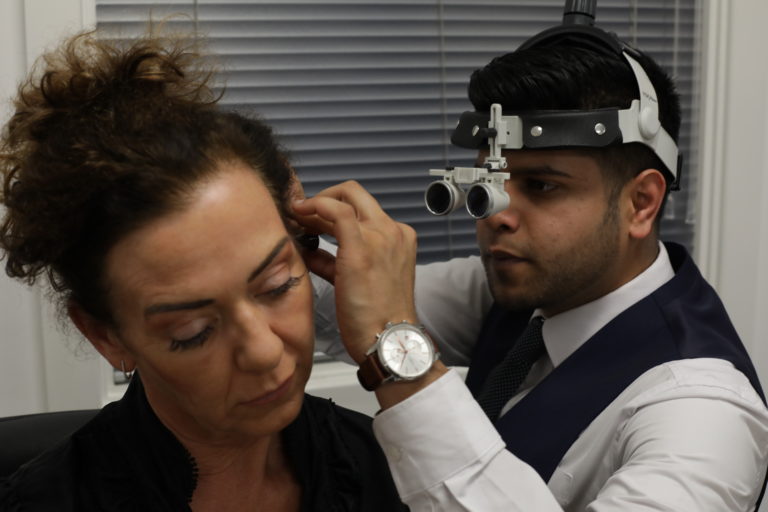
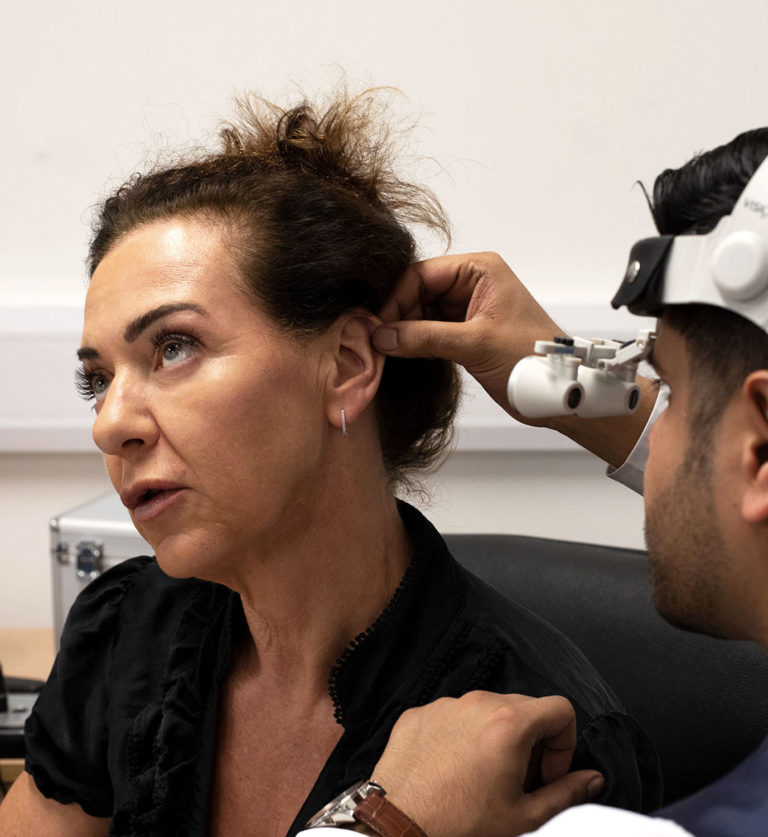
A private hearing test with us takes around 45–60 minutes and costs £59. It is not simply a beep test. A full appointment covers:
- A discussion of your history — noise exposure, tinnitus, medication, family history, and where specifically you struggle
- Video otoscopy, so you see inside your own ear canals on a screen
- Pure-tone audiometry across the speech frequencies, air and bone conduction
- Speech testing, because understanding words in noise is what most people actually complain about
- Tympanometry where appropriate, to check middle-ear function
- Your audiogram explained properly, in the room, with time for questions
You leave with your results, a written report and a clear recommendation — which is sometimes “your hearing is fine, come back in two years”, sometimes “this is wax, let’s remove it”, and sometimes “here is what hearing aids would realistically do for you”.

One thing worth checking first: is it just wax?
A surprising number of people who book a hearing test are experiencing blocked ears rather than hearing loss. If your hearing dropped suddenly, feels muffled or blocked on one side, or followed a cold or a flight, wax is a common culprit. We check for it as part of every test, and if it is the whole story, ear wax removal is £60 for one ear and £80 for both. If we look and find no wax, you pay a £20 consultation fee rather than the full price.
What happens afterwards — and where the routes really differ
The test itself is broadly similar on both routes. The bigger difference is what comes next.
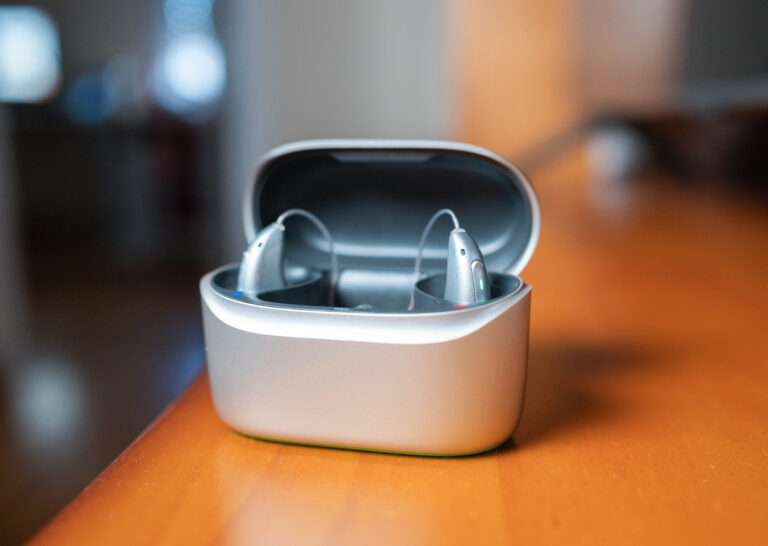
On the NHS you receive a device from the approved range, free of charge, with free repairs and batteries. Privately, you choose from across the market — we fit Phonak, Signia, Oticon and Widex — including discreet in-the-ear and rechargeable models the NHS does not routinely supply. Our hearing aid prices start at £798 for a single aid and £1,695 for a pair, and every fitting includes four years of unlimited aftercare with the same audiologist.
That last point matters more than people expect. Hearing aids are not a one-off purchase; they need adjusting as your ears and your life change. We have written more about the differences in our guide to private versus NHS hearing aids, and about the real-world figures in how much hearing aids actually cost in the UK.
A short checklist: which route suits you?
- Cost is the deciding factor and you can wait → NHS. Free test, free aids, free repairs.
- You want answers in the next week or two → private.
- You want a discreet, in-the-ear or rechargeable device → private, or at least a private test to see what would suit.
- You want the same clinician every time → private tends to offer better continuity.
- You suspect wax rather than hearing loss → book a wax appointment first; it may be all you need.
- Sudden hearing loss in one ear → do not wait for either route. Contact your GP or urgent care the same day.
And a point people rarely hear from a private clinic: there is nothing stopping you doing both. A private test gives you a detailed baseline and a clear explanation; you can take that audiogram and still pursue NHS aids if that is what you decide.
Booking a hearing test in South West London and Surrey
We are an independent audiology practice with clinics in Wimbledon, Teddington, Wallington and Addiscombe, and we also carry out home visits across the area — £89 for a hearing test and £139 for wax removal — for anyone who finds travelling difficult. If tinnitus is part of your picture, our tinnitus page explains how we assess it.
Frequently asked questions
Do I need a GP referral for a private hearing test?
No. You can book directly with us. If we find something that needs medical attention, we will write to your GP or refer you on.
Can I use a private audiogram for an NHS referral?
It is helpful supporting information and we are happy to provide a copy, but NHS departments will usually carry out their own assessment before fitting.
Is a private hearing test more accurate than an NHS one?
No — both use the same calibrated equipment and the same standards. The differences are appointment length, waiting time, and the range of devices available afterwards.
If you would like an unhurried look at your hearing and a straight answer about what, if anything, you need, you can book an appointment here or give us a call — we are happy to talk it through first.