Autumn Ears: Colds, Flights and Why Hearing Often Feels Worse This Season
If your hearing seems to dip every autumn — ears feeling blocked after a cold, or popping and crackling on a flight — you’re not imagining it. The combination of cold and flu season and more travel makes this one of the most common times of year for ears to act up, and it’s almost always down to one small structure: the Eustachian tube.
Why colds block your ears
Your middle ear connects to the back of your throat via the Eustachian tube, which normally opens briefly when you swallow or yawn to keep air pressure equal on both sides of the eardrum. A cold causes inflammation and extra mucus in the nose and throat, which can swell shut or partially block this tube. With the tube not opening properly, air pressure in the middle ear can’t equalise, fluid can build up behind the eardrum, and sound transmission gets muffled — which is why colds so often come with that “underwater” feeling in one or both ears.
Why flights make it worse
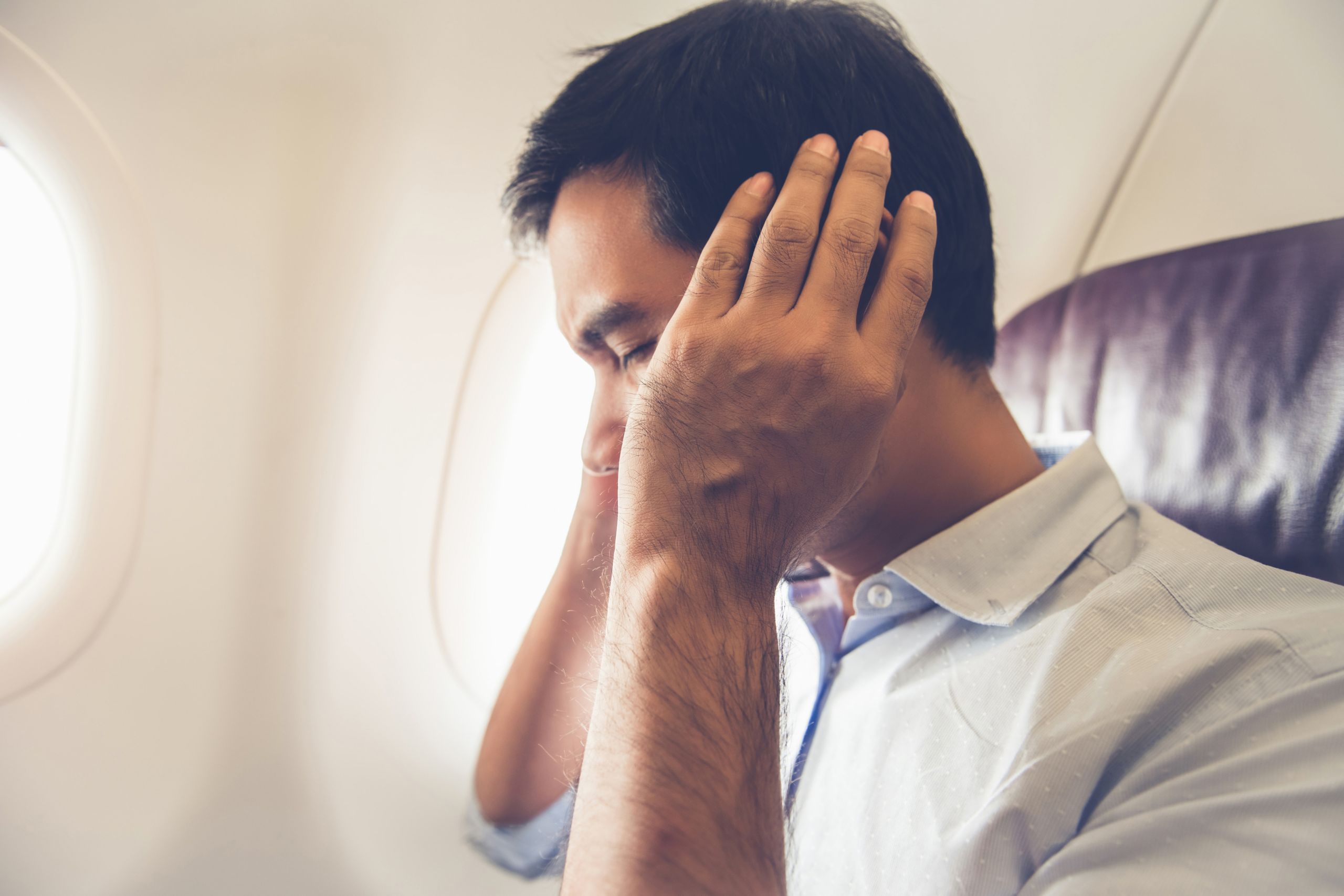
Flying adds a second challenge on top of any cold: rapid changes in cabin air pressure, especially during descent. A healthy Eustachian tube handles this fine, popping open to equalise pressure as you swallow or yawn. But if it’s already swollen from a cold, it may not open properly, leaving a pressure difference across the eardrum that can range from mild discomfort to genuinely sharp pain — a condition sometimes called “airplane ear” or barotrauma. This is why flying with a heavy cold is best avoided if you can help it, and why cabin crew suggest swallowing, yawning or chewing gum during descent.
Is it a cold, wax, or something else?
These three causes can feel similar, so it’s worth knowing roughly how to tell them apart:
- Cold or Eustachian tube congestion: Both ears often affected, alongside a blocked nose, sore throat or other cold symptoms, improving as the cold clears.
- Ear wax: Usually one ear more than the other, no cold symptoms, and the blocked feeling can come on gradually over weeks rather than appearing with an illness — we cover this in more detail in our guide to ear wax and tinnitus.
- Something else: Sudden hearing loss, dizziness, significant pain, or symptoms in only one ear with no obvious trigger are worth getting checked promptly rather than waiting it out.
What actually helps
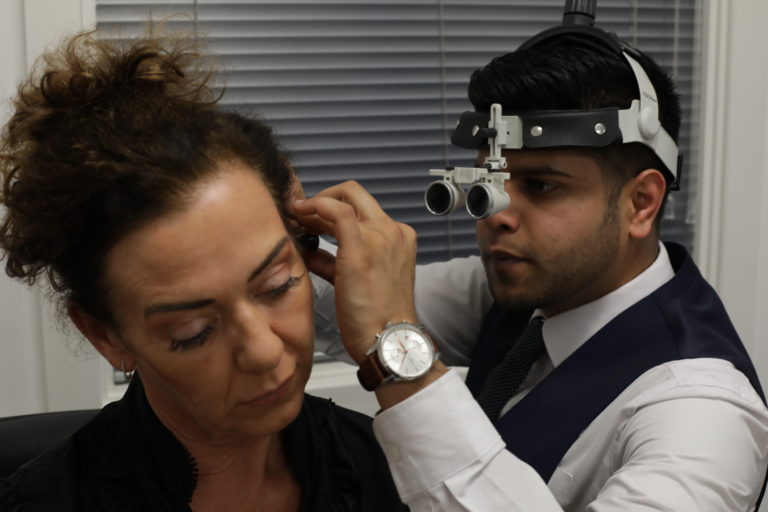
For a straightforward cold-related blockage, simple measures usually help: staying hydrated, using a decongestant or saline nasal spray if suitable for you, and gently yawning or swallowing to encourage the Eustachian tube to open. Avoid forcefully blowing your nose, which can push pressure the wrong way. Most cold-related blockages clear within one to two weeks as the underlying cold resolves. If it’s dragging on well beyond that, or keeps recurring every time you get a cold, it’s worth having your ears properly examined — sometimes what looks like a stubborn cold blockage turns out to be wax that’s just been made more noticeable by the congestion, and sometimes it’s fluid that needs a closer look. A standard hearing assessment with video otoscopy will show clearly what’s going on, and if wax turns out to be part of the picture, removal costs £60 for one ear or £80 for both.
Blocked ears this autumn — seen at our South West London clinics
If your ears are still blocked a couple of weeks after a cold, or flying has left one ear feeling persistently different, we can take a proper look at our clinics in Wimbledon, Teddington, Wallington and Addiscombe. We’ll check for wax, look at how your eardrum is moving, and talk through whether it’s something that just needs time or something worth treating directly. A hearing test costs £59, with home visits available at £89 for anyone who’d rather not travel while unwell.
Quick checklist: is your blocked ear worth getting checked?
- Has it lasted more than two weeks since your cold cleared up?
- Is it in one ear much more than the other?
- Is there pain, dizziness, or a sudden change in hearing?
- Does it happen every time you fly, even without a cold?
- Has it been over a year since your ears were last checked?
Any “yes” here is a reasonable reason to book a check rather than wait it out again next time.
Frequently asked questions
How long should blocked ears last after a cold?
Most clear up within one to two weeks as the cold itself resolves. If it’s still blocked after that, or keeps happening with every cold, it’s worth having it looked at rather than assuming it’ll always sort itself out.
Should I avoid flying with a blocked ear?
Flying with a heavy cold increases the risk of ear pain or discomfort during descent, since a congested Eustachian tube struggles to equalise pressure. If you must fly, a decongestant beforehand and swallowing or yawning during descent can help, but if you’re prone to severe pain when flying unwell, it’s worth discussing with us or your GP in advance.
Can blocked ears from a cold cause permanent hearing loss?
Usually not — most cold-related blockages are temporary and resolve fully. Persistent fluid behind the eardrum occasionally needs specific treatment, which is why it’s worth getting checked if a blockage doesn’t clear within a couple of weeks, rather than risking it becoming a longer-term issue.
Ears still feeling blocked this autumn? Read about wax, blocked ears and tinnitus, compare private vs NHS hearing tests, or book an appointment and we’ll take a proper look.